
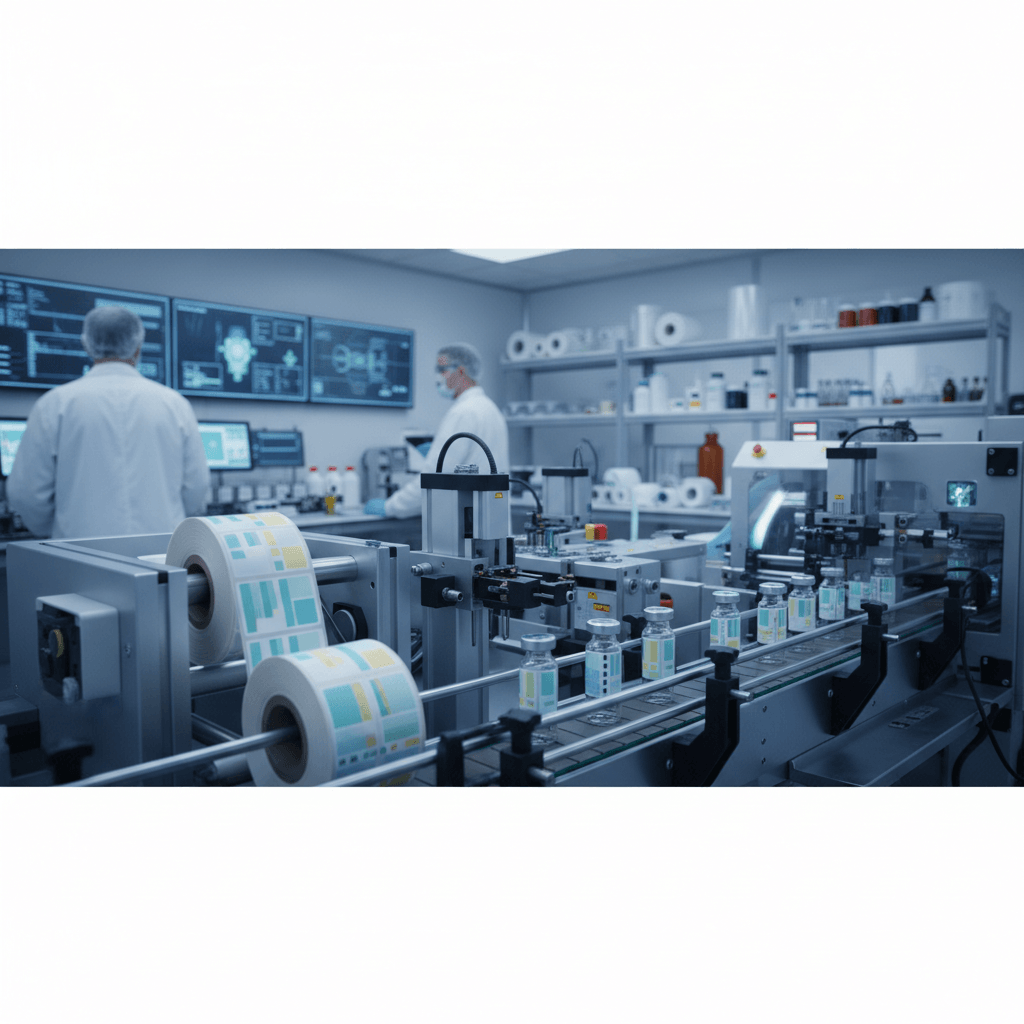
I find that understanding the unseen work behind everyday processes can truly open our eyes. For laboratories, the precision and reliability of their operations hinge on many factors, and one often overlooked but critically important area is labeling. Behind lab labeling production processes lies a complex world of specialized materials, advanced technology, and stringent protocols that ensure accuracy and safety.
I know many people might think a label is just a sticker, but in a lab environment, it is so much more than that. It is a fundamental component for maintaining scientific integrity, tracking samples, and protecting patient data. This crucial task requires careful planning and execution because even a tiny mistake can have serious consequences for research and diagnostics.
My goal here is to pull back the curtain on these processes. We will explore how labels are made, the challenges involved, and the innovative solutions that keep science moving forward efficiently. It is a field that blends material science, printing technology, and rigorous data management to support vital scientific work.
The Core Role of Labeling in Scientific Endeavors
When I think about lab work, images of microscopes, test tubes, and complex machinery often come to mind. But without precise labeling, all that sophisticated equipment would be useless. Labels serve as the primary identifiers for every sample, reagent, and piece of equipment in a laboratory. They are the silent guardians of data integrity and traceability.
A well-designed labeling system prevents errors, reduces the risk of contamination, and ensures that experiments can be replicated and verified. It is the backbone of good laboratory practice and a critical element in quality control. I have seen firsthand how much difference a clear, durable label makes in avoiding costly mistakes and delays.
Ensuring Sample Integrity
Sample integrity is paramount in any lab. Imagine a freezer filled with thousands of biological samples, each one representing years of research or a patient’s diagnostic journey. Each sample needs a unique identifier that can withstand extreme temperatures, harsh chemicals, and extended storage periods.
Without labels that stay put and remain legible, samples can be lost or misidentified, rendering them useless. This could mean wasted time, wasted resources, and in clinical settings, potentially incorrect diagnoses. The labels must maintain their integrity just as much as the samples themselves, so this means using materials resistant to chemicals, moisture, and temperature fluctuations.
Tracing the Experimental Journey
Every scientific experiment follows a specific pathway. From initial collection to final analysis, each step creates data points that need to be recorded and associated with a particular sample. Labels help to map this entire journey, providing an unbroken chain of custody for every item.
I believe this traceability is essential for auditing, compliance, and troubleshooting. If an unexpected result occurs, a robust labeling system lets researchers quickly backtrack to identify the source of the issue. This could involve checking the reagent lot number, the date of sample collection, or the specific technician who processed it.
Materials and Technology Behind Lab Labeling Production Processes
The science of lab labeling extends far beyond simple paper and ink. The environment within a laboratory is demanding, so labels need to perform under conditions that would destroy everyday adhesives and print. This calls for highly specialized materials and advanced production technologies.
I often tell people that the choice of material depends on where the label will live. Some labels go on slides for microscopic analysis, others on cryogenic vials stored in liquid nitrogen. Each application presents unique challenges for adhesion, print durability, and readability.
Specialized Label Stock and Adhesives
Lab labels are not one-size-fits-all. They are engineered from advanced synthetic materials like polypropylene, polyester, and vinyl, chosen for their resistance to water, solvents, and abrasion. These materials do not tear easily and they stand up to various cleaning agents used in labs.
The adhesives are equally important. They must bond securely to different surfaces, from glass and plastic to frosted and curved containers. Specialized cryogenic adhesives can withstand temperatures as low as -196°C, while others are formulated for high heat sterilization. Finding the right combination of label stock and adhesive is a critical step in the production process.
Printing Technologies for Durability
The method of printing also plays a major role in a label’s longevity and readability. Thermal transfer printing is very popular in labs because it produces durable, smudge-proof, and chemical-resistant images. It uses a heated printhead to transfer ink from a ribbon onto the label material.
Direct thermal printing is another option. It does not use ink but relies on heat-sensitive paper, so it is often chosen for temporary labels or those not exposed to extreme conditions. We also see laser printing for certain applications, offering high resolution and resistance to some chemicals. Each technology has its place, chosen based on the label’s intended use and the required durability.
The Rigorous Process of Label Design and Application
Creating effective lab labels involves much more than just sticking text on a piece of material. It is a carefully managed process that integrates data, design, and automated application to ensure accuracy and efficiency. This process is essential for preventing human error and maintaining high throughput.
I have observed that modern laboratories prioritize integrated systems that connect sample information directly to the label printing process. This integration helps minimize manual data entry, which is a common source of mistakes. The goal is always to make the labeling as seamless and error-free as possible.
Data Management and Integration
At the heart of any reliable labeling system is robust data management. Lab information management systems, or LIMS, store all relevant data for samples and experiments. The label production process pulls information directly from these systems, so this ensures that the data printed on the label matches the digital record exactly.
This integration removes the chance of typos or transcription errors that can occur with manual entry. Barcodes and QR codes are commonly used because they condense a large amount of information into a small, scannable format. These codes link back to comprehensive digital records, offering a powerful way to manage vast quantities of data quickly and accurately.
Automation in Labeling Workflows
Manual labeling is slow and prone to errors, especially in high-volume labs. That is why automation is a cornerstone of efficient label production. Robotic labeling systems can apply labels to thousands of tubes, plates, and vials per hour with incredible precision.
These automated systems can also print labels on demand, adjust for different container sizes, and even verify placement. Automation helps speed up processes significantly and improves the consistency and accuracy of labeling. It allows lab personnel to focus on more complex tasks, so it boosts overall productivity and safety.
Meeting Regulatory Standards and Ensuring Compliance
The world of laboratory science is heavily regulated, and for good reason. Public health and safety depend on accurate, traceable data. Labeling plays a critical role in meeting these strict standards, whether for medical diagnostics, pharmaceutical development, or environmental testing.
I understand that compliance is not optional. Laboratories must adhere to national and international guidelines to ensure the validity of their results and the safety of their products. This means every aspect of label production must be carefully controlled and documented.
Industry-Specific Requirements
Different lab types operate under different regulatory frameworks. For example, clinical labs must follow guidelines like those from the Clinical Laboratory Improvement Amendments, or CLIA, in the United States. Pharmaceutical companies have their own set of rules from agencies such as the Food and Drug Administration, or FDA.
These regulations often dictate what information must be present on a label, how it should be displayed, and for how long it needs to be legible. I know that failing to meet these specific requirements can lead to serious legal consequences, so robust and compliant labeling production processes are a fundamental operational necessity.
Preventing Errors and Ensuring Data Accuracy
The primary goal of regulatory compliance in labeling is to prevent errors that could harm patients or invalidate research. This is where the accuracy of the label production process becomes very important. I often think about how crucial this is when considering consumer products too.
For example, if you are looking for specific health supplements, like various Marine Collagen Brands, you rely on the label to provide accurate information about ingredients, dosage, and origin. In labs, similar trust in labels ensures that researchers are working with the correct substances and that diagnostic results are attributed to the right patient. Comprehensive quality checks during label production, including visual inspections and barcode verifications, are essential steps in maintaining this accuracy.
Innovations Driving the Future of Lab Labeling
The field of lab labeling is always evolving. New technologies and materials constantly emerge, pushing the boundaries of what labels can do. I am always excited to see how these innovations promise even greater efficiency, accuracy, and sustainability in laboratory operations.
From smart labels that communicate data wirelessly to eco-friendly options, the future of lab labeling looks quite dynamic. These advancements address current challenges and open up new possibilities for how labs manage their resources and data.
Smart Labels and RFID Integration
One of the most exciting developments is the rise of smart labels, especially those incorporating Radio Frequency Identification, or RFID. Unlike traditional barcodes that require a direct line of sight to scan, RFID tags can be read wirelessly from a distance and even through packaging.
This technology allows for automated inventory tracking, faster sample retrieval, and real-time monitoring of conditions like temperature. Imagine a freezer automatically updating its inventory as samples are added or removed. That is the power of RFID in lab settings, reducing manual tasks and enhancing data capture significantly. I think this will be a game changer for many labs in the future.
Sustainable Labeling Solutions
As environmental awareness grows, laboratories are looking for more sustainable options across all their operations, including labeling. Traditional labels often end up in landfills, but new innovations are changing this. We are seeing more labels made from recycled content and biodegradable materials.
There are also developments in wash-away adhesives that allow labels to be easily removed without leaving residue, so this makes it simpler to reuse lab containers. I think these eco-friendly labeling solutions help labs reduce their environmental footprint and align with broader sustainability goals. This shift benefits the planet and often improves lab efficiency in the long run.
Understanding the Intricacies of Lab Labeling Production Processes
I have learned that the world behind lab labeling production processes is far more intricate and important than most people realize. It is a critical field that underpins the reliability, safety, and efficiency of scientific research and clinical diagnostics. From the careful selection of specialized materials and adhesives to the deployment of advanced printing technologies, every step is designed to meet the rigorous demands of laboratory environments.
The integration of data management systems and automation tools further enhances accuracy, minimizing human error and streamlining workflows. Compliance with strict regulatory standards is not just a formality; it is an essential safeguard that protects public health and ensures the integrity of scientific findings. As technology continues to advance, innovations like smart labels and sustainable materials are paving the way for even more sophisticated and environmentally responsible labeling practices.
My hope is that this overview gives you a deeper appreciation for the complex work involved in creating these seemingly simple identifiers. They are the silent heroes of the lab, working tirelessly to keep everything organized and accountable. I encourage anyone involved in laboratory work to continuously evaluate and improve their labeling processes. By investing in robust labeling solutions, we contribute to better science and ultimately, a safer and healthier world.

